Daily Checks
- Oil level on the main tank and, where fitted, the OLTC conservator
- Visible oil leaks around gaskets, valves, and radiator joints
- Oil and winding temperature readings against normal range
- Unusual noise or vibration from the tank or cooling equipment
- Silica gel colour in the breather (a shift toward pink signals moisture saturation)
Monthly and Quarterly Checks
- Re-confirmation of oil level and condition of breather silica gel
- Cleaning or replacement of breather silica gel where needed
- Visual inspection of bushings for cracking, contamination, or tracking marks
- Functional check of cooling fans and pumps where fitted
- Review of any alarms or events logged since the last check
Half-Yearly Checks
- Oil sample for dielectric strength (BDV), moisture content, and acidity
- Cleaning of bushings with a soft cloth to remove surface contamination
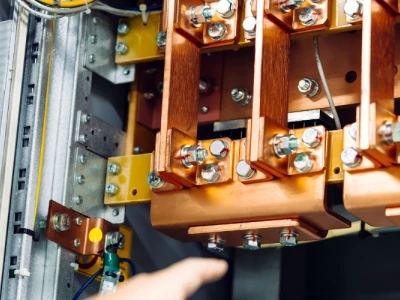
- Inspection and tightening of accessible electrical connections
- Functional test of protective relays (Buchholz, pressure relief)
Annual and Major Checks
- Full dissolved gas analysis (DGA) panel, more frequently for higher-voltage or more critical units
- Insulation resistance and polarization index testing
- Winding resistance and turns ratio testing
- Earth resistance measurement
- Furan analysis, typically every couple of years once a transformer has several years of service
- Thorough inspection of the OLTC mechanism, including contact wear where accessible
Which Checklist Items Still Need a Technician?
Some tasks genuinely need technicians on site. Others were always standing in for continuous data.
| Still needs a technician | Can move to continuous monitoring |
| Tightening electrical connections | Oil and winding temperature checks. |
| Cleaning bushings and accessories | Oil level monitoring |
| Replacing silica gel | DGA trend sampling |
| Visual inspection for physical damage | Cooling fan and pump status |
| OLTC mechanical inspection | Load and voltage trend tracking |
The checklist does not shrink. The right-hand items just run every few minutes instead of once a quarter.
This is the question worth asking honestly, because the answer has shifted for a meaningful chunk of this list. Some items genuinely need a person on site. Tightening a connection, cleaning a bushing, replacing silica gel, and most visual inspections for physical damage all require hands and eyes at the transformer. No amount of sensor data changes that.
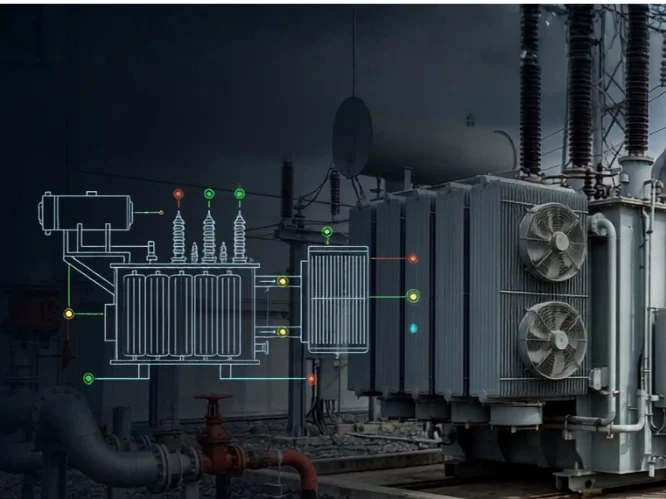
Other items on this list exist mainly because there was no better option. A daily oil temperature check exists to catch a problem between scheduled tests. A continuous temperature sensor does the same job far more often, and it doesn’t get skipped because someone was busy that day. The same logic applies to oil level, and increasingly to basic DGA trending, where an online sensor reads continuously instead of waiting for the next scheduled sample.
The practical shift isn’t replacing the checklist. It’s recognizing that some line items on it were always a substitute for continuous data nobody had yet, and now that the data is available, those specific items can move from a person’s calendar to a dashboard, freeing up maintenance time for the things that still genuinely need a technician.
Preventive vs. Predictive Maintenance
A preventive schedule, the checklist above, is built on fixed intervals drawn from population-wide experience. A predictive approach adds a second layer on top of it: acting on what a specific transformer’s own data is actually showing, rather than only on the calendar. The two aren’t in competition. A predictive approach still leans on the same underlying tests and inspections, just triggered by a trend instead of a date. We go into this distinction in more detail in our post on condition-based vs. time-based maintenance.
People Also Ask
- What is included in transformer maintenance? Visual inspections, oil level and quality checks, cleaning of bushings and accessories, functional tests of protective relays, and periodic electrical tests such as insulation resistance, winding resistance, and dissolved gas analysis, carried out on a schedule ranging from daily to annual depending on the item.
- How often should a transformer be serviced? Daily visual checks, monthly or quarterly functional checks, half-yearly oil testing, and a full annual inspection are the common baseline, though the exact frequency depends on the transformer’s voltage class, age, and how critical it is to operations.
- What is the difference between preventive and predictive transformer maintenance? Preventive maintenance follows a fixed schedule based on population averages. Predictive maintenance acts on a specific transformer’s own condition data, which can mean doing something earlier than the schedule calls for, or confirming that a scheduled task genuinely isn’t needed yet.
- Who performs transformer maintenance? Routine visual checks are often handled by in-house plant personnel. Electrical testing such as insulation resistance, winding resistance, and oil sampling usually requires trained technicians with the right test equipment, and major OLTC or internal inspections are frequently handled by the manufacturer or a specialized service provider.
Conclusion
A transformer maintenance checklist earns its place because a lot of what keeps a transformer healthy genuinely does need a person checking it on a schedule. The honest update to that checklist isn’t throwing it out. It’s recognizing which items on it were really there to catch something between visits, and letting continuous data take over exactly those items, while the rest stays exactly where it’s always been.
Technical Savings
- Potential Downtime Savings
- Potential Asset Life Increment
- Potential Efficiency Increment
TXIQ covers the continuous half of this checklist automatically, temperature, oil condition, gas trends, and load, so your team’s time goes toward the inspections that actually need a person.