What Is a Transformer Health Index?
A Transformer Health Index is a score (typically scaled from 0 to 100, or categorized as “Good / Fair / Poor / Critical”) that quantifies the overall condition of a transformer in one easy-to-understand number.
Assume it as a “credit score” for your transformer. Similar to a credit score, that combines income, debt, payment history, and other factors into one figure, the HI combines multiple condition indicators like insulation degradation, thermal stress, mechanical wear, oil quality, dissolved gases, electrical parameters, and more into a single easy to understand view.
What is the purpose of Health Index?
- Move beyond isolated test results.
- Give asset managers a prioritized, risk-based view of an entire fleet.
- Shift from time-based maintenance to condition-based predictive strategies.
In easy words, the health index answers two critical questions every utility or plant manager asks:
- Is this transformer reliable right now?
- How urgently do I need to act?
1. Importance of the Health Index
Traditional way for transformer maintenance is expensive, inefficient, and risky. Here’s why a well-structured Health Index changes everything, it brings clarity:
Fleet Prioritization
Most organizations manage hundreds of transformers that are of different makes, ages, and operating conditions. An Health Index lets you rank them instantly like “Unit A is at 92 (excellent), Unit B is at 41 (critical)”. This makes you to no more treat every asset the same.
Unplanned Outages Drop
Transformer failures are rarely sudden. They send warning signals for months or years. Health Index identifies these signals early by combining trends across parameters. This data helps to turn “potential failure” into “planned intervention”.
Extended Asset Life
By addressing issues at the right time, neither too early (wasting money) nor too late (catastrophic failure) one can draw maximum life out of every transformer. Studies show 10–20% reductions in lifecycle costs when HI-based strategies are adopted.
Regulatory, Safety & Sustainability
Regulators worldwide are making strict laws on reliability standards. A documented Health Index provides auditable proof of cautious asset management. It also prevents safety risks and supports ESG goals by minimizing premature replacements.
Capital Investment Optimization
Instead of replacing transformers on a fixed cycle of 30–40 year, you replace them based on actual health. Hence, budgets are spent where they deliver the highest return.
2. How IIoT Data Helps Us Build a Reliable, Real-Time Health Index
The major point where technology meets practicality! Traditional Health Index calculations depended on periodic, offline data & oil samples sent to labs, occasional electrical tests, and manual inspections. The result? A snapshot that becomes outdated by the time it reaches the decision-maker.
Industrial IoT changes the flow completely by delivering continuous, real-time, multi-parameter data directly from the transformer.
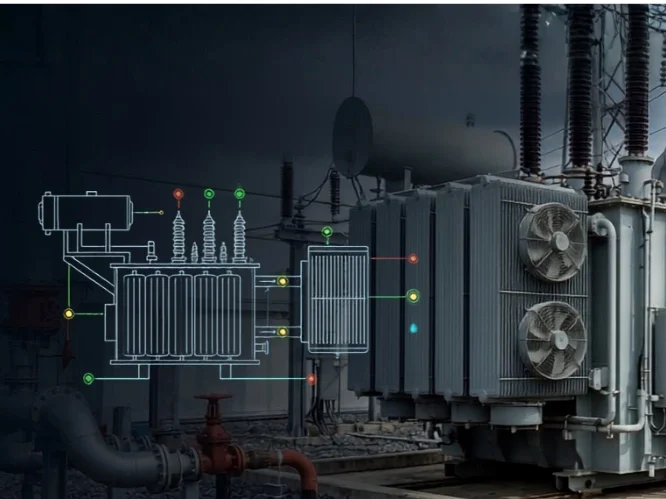
Key IIoT data streams that feed a modern Health Index include:
- Thermal data (top-oil temperature, hotspot temperature via fiber-optic sensors)
- Dissolved Gas Analysis (DGA) real-time monitoring of hydrogen, methane, ethylene, acetylene, etc.
- Oil quality parameters (moisture, acidity, breakdown voltage)
- Electrical parameters (load current, voltage, power factor, harmonics)
- Mechanical data (vibration, partial discharge, bushing condition)
- Environmental & operational context (ambient temperature, humidity, load patterns)
These parameter are monitored by sensors and connect through secure IIoT gateways to cloud or edge platforms. The Advanced analytics, often powered by machine learning models which then process the data in real time on a dashboard.
Weights are derived from international standards (IEEE, CIGRE), historical failure data, and sometimes customized using your own fleet’s failure modes. Machine-learning models can further refine the index by learning patterns unique to your transformers.
The result?
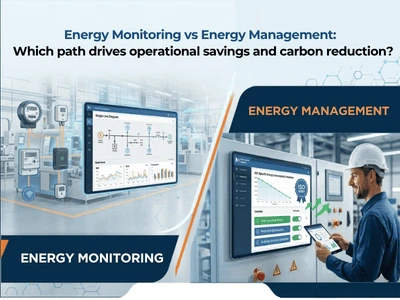
You get Health Index data that updates every few minutes instead of every few months. You not only know the transformer is “okay today” also you know it’s trending towards a problem next quarter. Even you get to know exactly which parameters are driving the change. This modern practice has and will become a leap from monitoring (watching) to management (acting with foresight).
From Data to Decisions Making
Developing a truly effective Transformer Health Index requires the right combination of domain expertise, data science, and a deep understanding of how transformers age in real-world conditions.
At Motwane Digital, we’ve seen how IIoT-powered Health Index systems are helping utilities and industries move from panic maintenance to strategic asset management. The technology has developed now. The question we ask is whether your organization is still relying on “monitor and hope” world or ready to adopt true management.
If you manage power transformers, the shift to a data-driven Health Index becomes stakes for reliability, cost control, and competitiveness.
Ready to turn from monitoring to management? Our team would be happy to present a practical Health Index roadmap for your fleet management.
Keep your transformers healthy and power flowing!