What Each Nameplate Figure Actually Limits
Nameplate (kVA/MVA) is the continuous rating under specified conditions, it is not necessarily the absolute maximum loading capability, The design limit of the transformer is not the real-time indicator of it’s capacity. A transformer can be within its kVA rating and still be thermally stressed if ambient conditions or harmonic loading are heigher than the assumed design.
Voltage ratio is the turns ratio the core and windings are built around. Operating outside the defined ratio not only shift the output voltage, but it also changes the flux density in the core. This can casuse increase losses and heating in ways that are not obvious from the voltage reading alone.
Impedance (%) is one of the more overlooked numbers on the plate. It directly determines how much fault current the transformer will let through during a short circuit. Due to which it sizes the protective relays and switchgear rating around the transformer. Impedance is both a tranformer design specification as well as a critical system design parameter.
Vector group (like Dyn11) defines the phase-angle relationship between the primary and secondary windings. It matters majorly at the moment two transformers need to run in parallel. Any mismatched vector groups can drive damaging circulating current between the transformers.
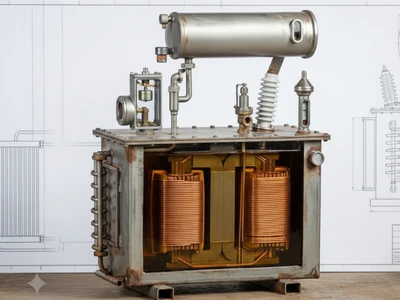
Cooling class (ONAN, ONAF, and combinations) describes how the transformer sheds heat (natural oil circulation and air, versus forced air, versus forced circulation). This is what actually defines how much additional load a unit can carry once forced cooling engages. This is also a reason why two transformers with the same kVA rating can have noticeably different real-world load flexibility.
Temperature rise (commonly given as two figures, like 55°C/65°C for average winding rise versus hotspot rise) is arguably the most operationally important number on the whole plate. Temperature rise is the actual baseline any thermal monitoring reading should be measured against. A winding running at a given absolute temperature can be perfectly normal or seriously abnormal depending entirely on what that number was designed to be.
What the Transformer Nameplate Doesn’t Tell You
Here’s the part worth being honest about: a nameplate describes what the transformer was built to do, not what it’s actually doing right now. Two transformers can be in the factory with an identical plate and, a decade later can genuinely be in different condition. One lightly loaded in a clean, temperate environment, the other running harmonic-rich load in a hot, humid environment. The plate on both units will read exactly the same. Nothing about it updates.
Solution
A transformer nameplate is not a formality to skim past on the way to the kVA rating. Each line constrains something specific:
- Fault current levels
- Parallel-operation compatibility
- Cooling flexibility
- Temperature limits
and the real baseline for judging whether a temperature reading is fine or a problem. What it can’t do is tell you anything about today. For that, the plate is where the questions start, not where they end.
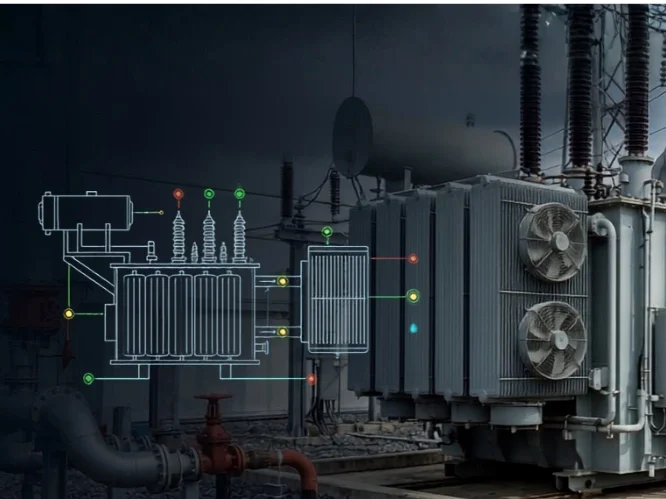
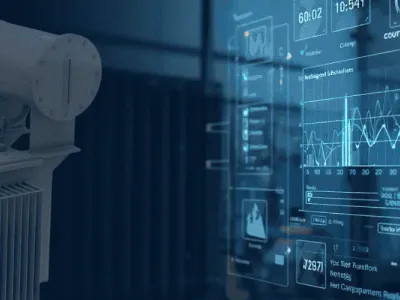
The nameplate tells you what the transformer was built to handle. Continuous condition monitoring tells you what it’s actually handling right now, and after years in service you get completely different story on both the practices. The real-time asset health monitoring will have saved asset aging, money, power stability and at the most dissasters.
Technical Savings
- Potential Downtime Savings
- Potential Asset Life Increment
- Potential Efficiency Increment