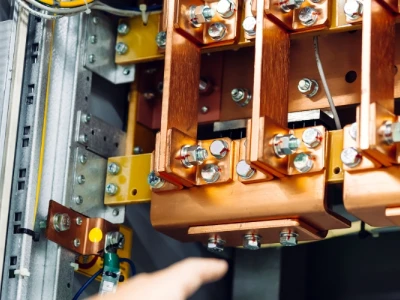
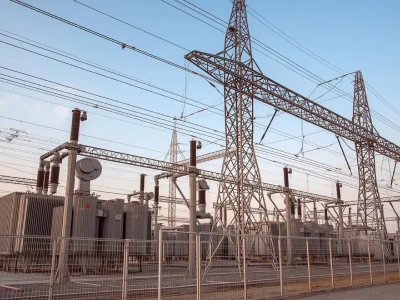
What is Energy Monitoring?
Energy Monitoring is the foundational layer of visibility. It requires installing sensors, smart meters, and communication gateways to monitor the plant’s real-time electrical parameters. This includes parameters like:
- Voltage
- Current
- Power factor
- Active power
- Reactive power
- Apparent power
- Harmonics
- Energy in kWh
- Power in kVA
Modern monitoring systems like our Energy Monitoring System (EMS-IQ) go further:
- Interactive Single Line Diagram (SLD) showing end-to-end power flow
- Accurate node-level reporting to avoid manual meter-reading errors
- Real-time alerts (SMS, email, WhatsApp, and on-site hooters)
What is Energy Management?
Energy Management is the proactive, strategic layer next to energy monitoring. It uses the collected data to drive decisions, automation, and continuous improvement. In short it turns numbers into actionable insights.
A full Energy Management approach typically aligns with ISO 50001 and includes:
- Baseline setting and target definition
- Automated control strategies (load shedding, capacitor bank switching, Distributed Generation optimization)
- AI-driven fault detection and predictive maintenance
- Integration with production planning to minimize SEC
- Regular energy audits, preventive actions, and performance reviews
Advantages
| Aspect | Energy Monitoring | Energy Management |
|---|---|---|
| Core Benefit | Immediate visibility into energy flows and anomalies | Direct and sustained reduction in energy bills (5–20% typical) |
| Data & Decision Making | Accurate data replaces guesswork and manual logs | Improved Specific Energy Consumption (SEC) tracking and benchmarking |
| Issue Detection & Prevention | Early detection of leaks, overloads, or power-quality issues | Extended asset life through optimized loading and power quality |
| Reporting & Compliance | Compliance-ready reports with single-click PDF generation | Regulatory compliance and ESG reporting made effortless |
| Environmental Impact | – | Significant environmental gains — up to 3,100 metric tones of CO₂ reduction per year |
| Cost & Implementation | Low-to-moderate implementation cost compared to full automation | Higher ROI & better payback period through both cost savings and risk reduction |
Disadvantages
| Aspect | Energy Monitoring | Energy Management |
|---|---|---|
| Core Limitation | Passive system — provides data but no automatic corrective actions | Higher initial investment (hardware + software + integration + training) |
| Operational Challenge | Risk of “data overload” without proper analytics | Requires organizational change and cross-functional ownership |
| Savings Realization | Savings potential remains un-noticed unless someone actively reviews dashboards daily | Needs skilled personnel or reliable partner support for ongoing optimization |
| ROI & Payback | Limited ROI if the organization stops at monitoring alone | Longer payback period if baseline data collection phase is skipped |
What Customers Commonly Misunderstand
This is where most organizations lose potential savings.
Myth 1: “Installing energy meters is doing Energy Management”
Reality: Meters give you data; management turns data into savings. Many plants invest in monitoring dashboards yet see no reduction in bills because no one owns the action plan.
Myth 2: “Our existing SCADA systems already does energy management”
Reality: Traditional SCADA focuses on process control, not energy-specific optimization, SEC tracking, or carbon accounting. True energy management requires dedicated analytics layered on top.
Myth 3: “Only large industry uses Energy Management”
Reality: Even mid-sized plants (5–50 MW) achieve payback within 12–18 months when they combine real-time monitoring with simple automation rules.
Myth 4: “Monitoring will automatically reduce consumption”
Reality: Visibility alone rarely changes behavior. Without targets, alerts escalation, and accountability, consumption patterns remain unchanged.
Real Impact on Industry and the Environment
On Industry
Plants that embrace Energy Management System:
- 5–20% reduction in energy costs within the first year
- 25% increase in efficiency and electrical asset life through balanced loading and power-quality correction
- Reduced unplanned downtime by identifying overloads and harmonics early
- Better negotiation power with DISCOMs through accurate demand profiling
Sustainability
Every kWh saved directly cuts greenhouse gas emissions. A single medium-sized plant using Energy Management System has documented:
- 3,100 metric tones of CO₂ reduction per annum
- Contribution to national energy conservation goals and net-zero commitments
Why Awareness of Energy Management System is Critical
Most decision-makers today are aware of “energy monitoring” because it sounds technical and modern. Very few understand that monitoring is only the first step. Without awareness of the full Energy Management cycle, organizations:
- Under-invest in analytics and automation
- Miss government incentives and carbon credits
- Continue operating with sub-optimal SEC
- Risk falling behind competitors who have already moved to predictive, AI-driven optimization
At Motwane Digital, we believe awareness drives action. That is why our Energy Monitoring System (EMS- IQ) is designed as a scalable platform to start with powerful monitoring and seamlessly upgrade to fully Energy Management System (Automated controls, AI recommendations, and ISO 50001 alignment).
Energy Monitoring gives you visibility; Energy Management gives you control and results.
If your plant already has basic metering or is planning an energy project, question yourself:
- Are we only collecting data or actually reducing consumption?
- Do we track SEC against production in real time?
- Are we ready for the next level of optimization?
Our team is ready to conduct a detailed Energy Assessment and show you exactly where monitoring ends and management begins.
Optimize Plant Reliability. Maximize Efficiency. Reduce Carbon Footprint.