Why gases generate in Transformers?
Any thermal or electrical phenomena upon any chemical compound releases or undergoes a slight or complete change in the chemical composition. Transformer insulating oil and paper insulation are chemical based components and are chemically stable under normal operating conditions. However, when subjected to any stress such as overloading, partial discharges, arcing, hot spots, or insulation aging, it causes molecular bonds break down through processes like pyrolysis, oxidation, and ionization.
This decomposition or breakdown releases specific gases that dissolve into the insulating oil. The dissolved gases then act as direct indicators of internal conditions of the transformer’s health and indicate the type of transformer fault severity. Monitoring these gases helps early fault detection such as rise in temperature or tripping before it escalates to any hazardous concerns. Gas generation rates often increases when the faults change its stage this makes continuous monitoring more effective for predictive maintenance.
Insights into Key Transformer Fault Gases
Understanding the origin of individual gases and its effects helps maintenance teams to correlate data with operational realities:
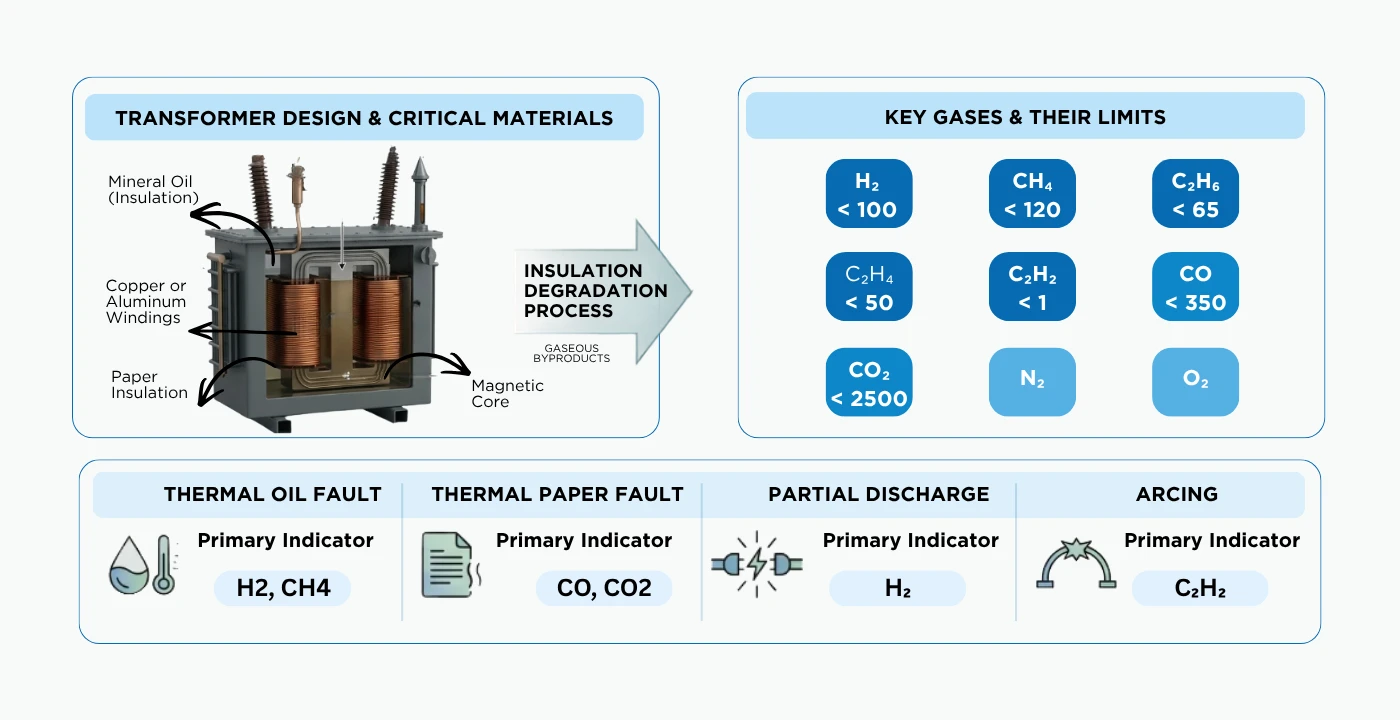
- Hydrogen (H₂) is generated primarily from oil due to electric discharge. This is the earliest indicator of partial discharge and hotspots. As Hydrogen is highly sensitive to low-energy activity, even a small increase of hydrogen content can indicate insulation defects, internal voids or high-voltage stress. It also indicates the early signs of electrical or thermal faults.
- Methane (CH₄) releases due to oil decomposition and is associated with low-temperature thermal faults. Presence of Methane indicates initial stages of oil overheating, typically below 300°C. It is caused due to localized hotspot or poor connections. Rising Methane level also indicates PD activity making them an important early indicator of thermal faults.
- Ethane (C₂H₆) is also released from oil decomposition and indicates moderate thermal faults typically <300°C. It is formed during moderate oil heating due to restricted oil circulation or mild overloading.
- Ethylene (C₂H₄) is released when transformer oil decomposes under high thermal stress. It indicates medium to high temperature thermal fault, occurring above 300°C and up to 700°C or higher. Raised ethylene levels indicate intense overheating of oil and metal surface. These are caused due to overloading, inadequate cooling or winding hotspots. Monitoring ethylene is very crucial as they may indicate accelerated insulation aging and risk of transformer failure.
- Acetylene (C₂H₂) is produced due to high-energy electrical discharge and is clear indicator of internal arcing. Even small amount of acetylene presence can be a sign of major issue, such as winding short circuits or insulation breakdown. As acetylene is rarely generated under normal operating condition, it is must that the transformer is given an early diagnosis to prevent equipment failure.
- Carbon Monoxide (CO) is produced when cellulose paper insulation decomposes due to thermal stress or electrical faults. CO levels indicate deterioration of solid insulation confirming the breakdown of insulation paper.
- Carbon Dioxide (CO₂) is generated due to natural aging and oxidation of cellulose paper insulation. It shows long-term insulation degradation and is observed alongside CO. Monitoring both the gases help to assess the percentage of paper degradation and estimate the life of insulation.
- Oxygen (O₂) enters the transformers through air ingress due to leaks or improper sealing. Raised oxygen levels accelerate oxidation of transformer oil and aging of insulation paper. It mainly identifies sealing problems early.
- Nitrogen (N₂) also enters the transformer from the atmosphere and is also an indicator of air leakage or problem with breather system.
Online DGA: Shift from Periodic Testing to Continuous Detection
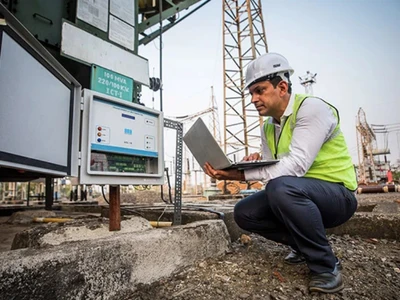
Periodic lab-based DGA (every 6–12 months) provides effective snapshots but frequently misses rapid fault generation. Online multi-gas monitoring utilizes modern sensors to provide continuous real-time data for timely and safe intervention.
Advantages of Online Monitoring Systems:
- Immediate alerts on rising anomalies and trend shifts.
- Precise dashboards of gas generation rates and correlations with load, temperature, and moisture.
- Reduced manual sampling frequency and associated costs.
- Seamless integration with SCADA, IoT, and fleet management platforms.
Effective Detection with Transformer IQ
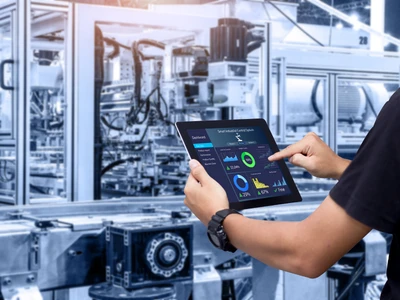
Motwane Digital’s Transformer IQ integrates advanced DGA sensors with AI-driven analytics to analyse gas data and provides actionable insights:
- Real-time multi-gas monitoring and trend dashboards.
- Automated fault detection and health indexing.
- Predictive insights, including Remaining Useful Life (RUL) estimates.
- Fleet-wide visibility with mobile and SCADA integration.
- Clear maintenance recommendations tailored to plant operations.
This enables a proactive shift from reactive maintenance to condition-based strategies. This also helps in optimizing reliability, extending asset life, and improving ROI.
Gases for Proactive Transformer Monitoring
Transformer fault detection based on gases through DGA remains one of the most effective tools for identifying hidden causes before they escalate. By understanding why and how these gases generate and analysing their specific signatures, industrialists can significantly enhance transformer reliability and operational resilience.
Ready to strengthen your transformer fault detection capabilities? Learn More About Transformer IQ and connect with our team for a customized assessment or demonstration.
Stay ahead with increased Asset life. Asset Reliablity. Asset Efficiency.