Why Transformer Oil monitoring is essential?
Before that, What is Dissolved Gas Analysis?
Dissolve gas analysis is a laboratory or online method that extracts, quantifies and detects the concentrations of gases in transformer oil.
Transformer oil serves three vital roles: electrical insulation, heat dissipation, and diagnostic medium. Under normal operation, oil and cellulose insulation remain stable. But when any thermal or electrical stress occurs then overloading, partial discharges or insulation cause the fromation of specific gasses that dissolve in the transformer oil.
These gases can footprint some specific fault inside:
- Hydrogen (H₂) – Early indicator of partial discharge
- Methane (CH₄) – Low-temperature thermal faults in oil (<300 °C)
- Ethane (C₂H₆) – Moderate thermal faults (300-700 °C)
- Ethylene (C₂H₄) – High-temperature oil overheating (>300 °C)
- Acetylene (C₂H₂) – High-energy arcing or sparking (>700 °C)
- Carbon Monoxide (CO) and Carbon Dioxide (CO₂) – Thermal decomposition of paper insulation
- Oxygen (O2) and Nitrogen (N₂) – Signals leak in gaskets, valves or tank itself.
Offline DGA vs Online DGA: Which Approach Fits Your Needs?
| Aspect | Offline DGA (Lab Sampling) | Online DGA (Continuous Monitoring) |
|---|---|---|
| Frequency | Periodic (quarterly/annually) | Real-time / hourly data |
| Detection Speed | Delayed (days to weeks) | Immediate alerts |
| Cost | Lower initial, higher logistics | Higher upfront, lower long-term |
| Best For | Fleet-wide screening, baseline data | Critical transformers, high-load assets |
| Accuracy & Repeatability | Lab-grade precision | Sensor-based with accurate trend focus |
Offline oil testing is essential for detailed analysis and compliance. However, online monitoring provides continuous visibility required for condition-based maintenance.
For better understanding, Engineers use several proven methods:
- Key Gas Method: Identifies the specific gas to locate the accurate fault.
- Rogers Ratio Method: Measures ratios of key gases to classify faults into thermal or electrical.
- Duval Triangle: Plots relative percentages of three key gases on a triangular graph for quick visual analysis of seven fault types.
- Doernenburg Ratio Method (DRM): Identifies specific fault types (thermal or electrical) in oil-filled transformers.
Mapping the regular trend rate of gas (ppm/day) can give a better understanding than a single snapshot. A sudden spike in acetylene, for example, signals an urgent arcing issue that may require immediate attention. Or a minute rise in CO or CO₂ points to insulation aging that may be managed with planned maintenance.
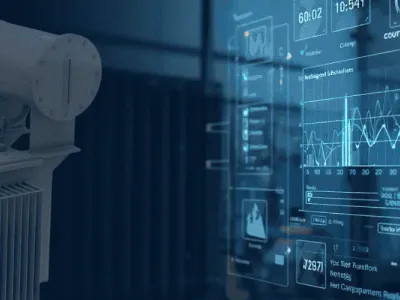
AI-Powered software automates these calculations and generates colour-coded health reports. When anomalies are identified, engineers get clear recommendation to make decisions.
Real-World Example of DGA
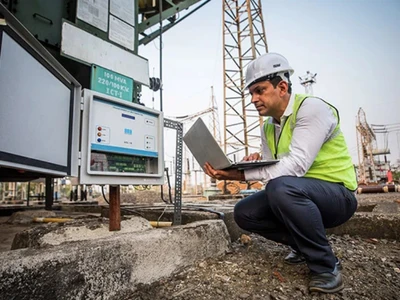
Consider, an industrial transformer that looked normal from the outside, and traditional routine checks did not show any problem. However, an online DGA system identified a slow increase in certain gases over a few weeks. This indicated a developing thermal issue inside the transformer.
An inspection done based on this, the problem was traced to a blocked radiator and poor oil flow which could not be detected by external inspection. The issue was then fixed during a planned shutdown which avoided a major failure that could have cost ₹2–5 crores including repair, downtime, and production loss.
DGA is impactful with Digital Monitoring
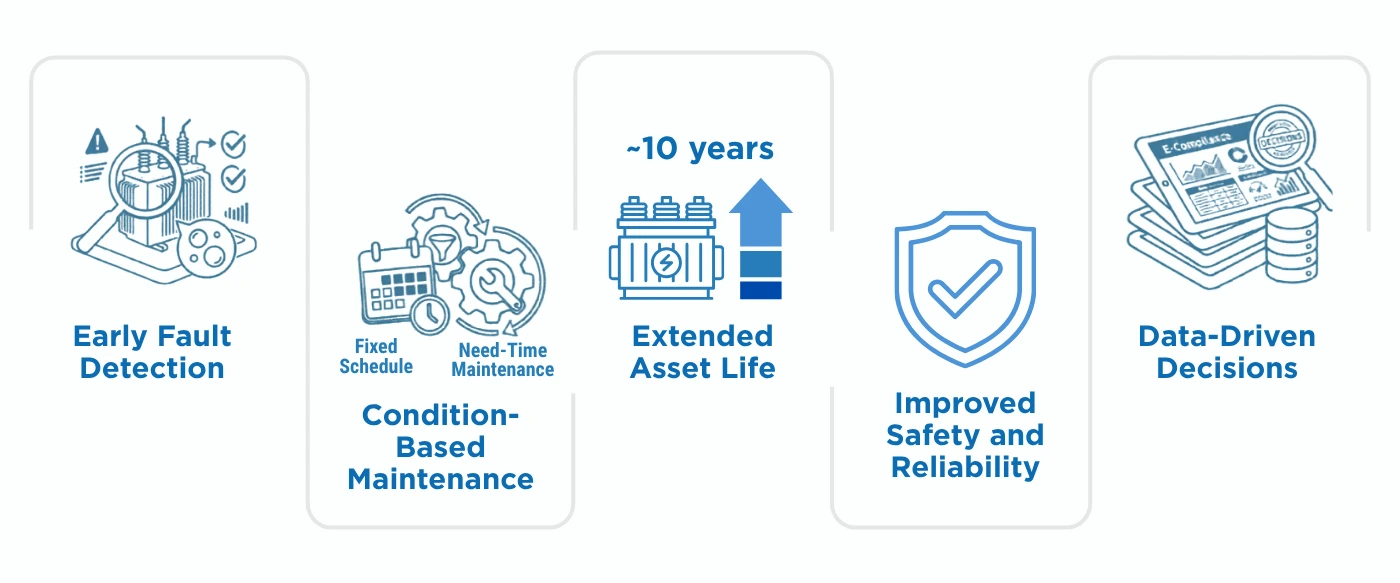
However, DGA alone tells what is the condition of the inside of transformer. But when combined with a digital platform with real-time monitoring, it tells when will it fail or what to do next. In short, decision making and visibility become easier.
In the operational world of renewable and heavy girds many transformer issues yet stay unnoticed until it’s too late. Dissolve Gas Analysis detect early insulation damage and overheating due to harmonic stress which are missed during the routine checks.
Explore our solution Transformer IQ an AI-Powered monitoring system that seamlessly help in health indexing and residual life analysis.
Contact us to know more on reliability, safety and ROI for your operations.
Stay compliant with AI-Powered Smart Monitoring of your Assets.