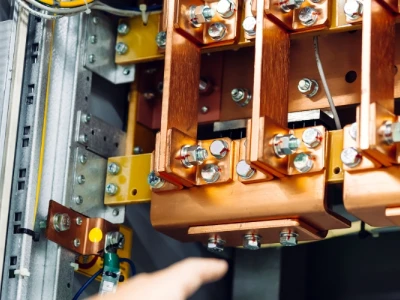
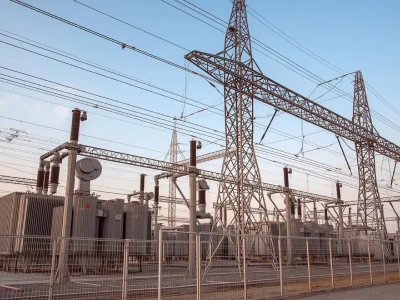
In industries, utilities, and renewable energy installations, unplanned downtime can lead to massive financial losses, safety risks, and operational disruptions. Condition monitoring has now been shifted from an optional enhancement into a fundamental strategy for maintaining critical assets like power transformers.
By continuously monitoring real-time data and applying AI-Powered analysis, organizations turning to shift from calendar-based maintenance to truly predictive maintenance that detect issues before they escalate into failures.
Lets explore the principles, parameters, and practical benefits of condition monitoring, with a primary focus on transformers while also addressing components such as busbar monitoring and electrical assets. Through detailed parameter tracking and advanced analytics, modern systems empower engineers to make data-driven decisions that enhance safety, efficiency, and asset lifespan.
Why Condition Monitoring?
Traditional maintenance often rely on periodic manual inspections or fixed schedules. This periodic maintenance can often miss early faults or generate unnecessary interventions. Condition-based monitoring addresses these limitations by delivering continuous, real-time visibility into asset health.
Key advantages include:
Early Fault Detection:
Event the minor deviations in temperature, load balance, or harmonic levels are detected instantly, providing ample time for corrective measures.
Optimized Maintenance Scheduling:
Maintenance is performed only on the basis of actual condition indicators which avoids unnecessary downtime and associated labour costs also extending the maintenance cycles.
Minimized Operational Disruptions:
Predictive capabilities significantly lower the forced outages, which is crucial for process industries and solar/wind farms where generation losses of generation have direct impact on revenue.
Strengthened Safety Protocols:
Real-time monitoring of overheating, insulation degradation, or protection of system failures allows operators to act before conditions become hazardous and turns into accidents.
Maximum Energy Efficiency:
Accurate loss tracking and performance analysis helps load optimization and loss reduction, directly lowering energy consumption.
Extended Asset Life:
Understanding cumulative thermal and electrical stresses helps maintenance of insulation and mechanical assets which can add several years to operational life.
Seamless Regulatory Compliance:
Documented, timestamped data streams support audits and ensures adherence to guidelines such as those outlined in CEA operations and maintenance manuals for transformers.
Efficient Fleet Monitoring:
In geographically dispersed installations, the ability to provide centralized insights allow precise prioritization of field staff and asset-specific trend analysis.
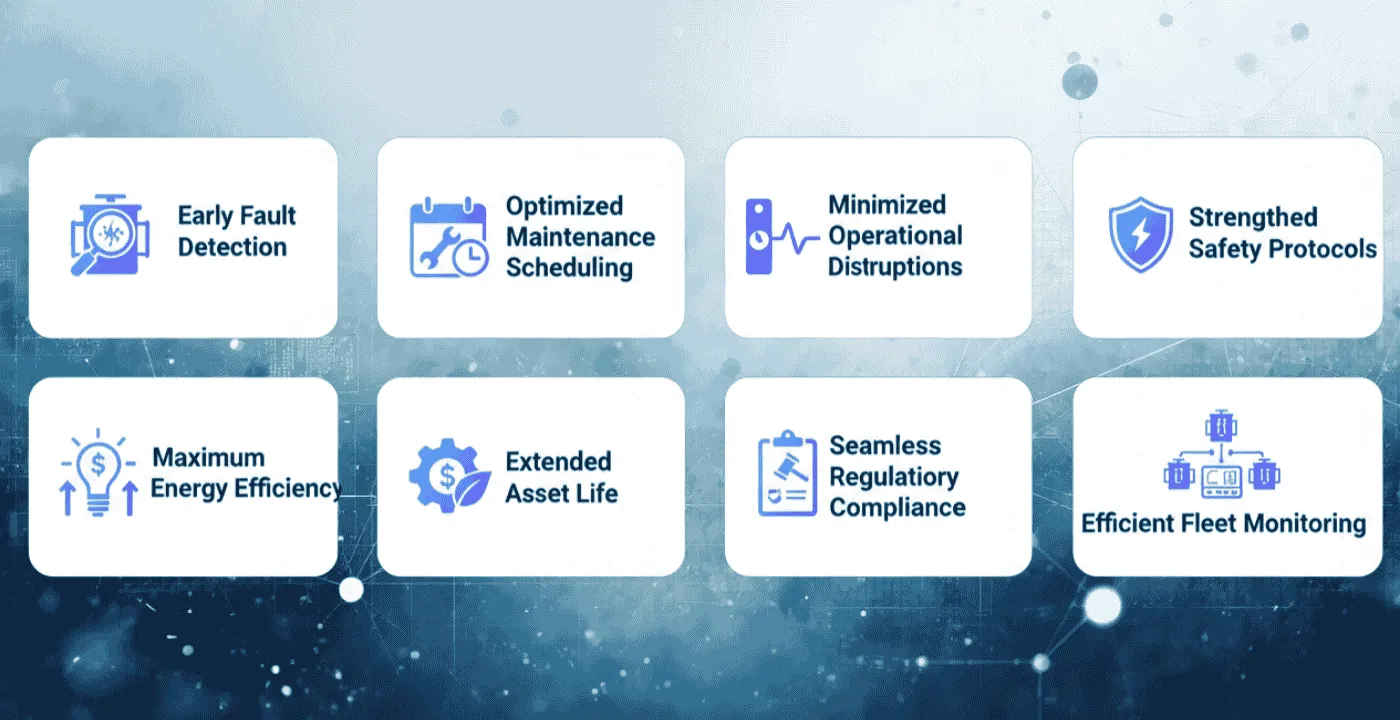
These outcomes collectively reduce total ownership costs and increases the resilience of grids that are increasingly impacted by the integration of renewable and fluctuating demand patterns.
Parameters for Transformer Condition Monitoring
An accurate condition monitoring framework depends on a wide set of online parameters that collectively provide complete thermal, electrical, and environmental analysis of the transformer. Each parameter is chosen because it helps track a specific part of health or performance. By monitoring these parameters continuously, it becomes easier to spot patterns over time and catch problems early.
Oil Temperature:
This key parameter is a measure of the overall cooling efficiency and condition of the transformer. A gradual or sudden increase in oil temperature can indicate overloading, restricted oil flow, radiator blockages, or insulation degradation.
Online monitoring allows operators to early detection of overheating. This helps enhance load reduction or cooling, and prevent accelerated ageing of cellulose insulation. Over the time stable oil temperature trends contribute to improve equipment reliability and a substantial decrease in the probability of thermal runaway or catastrophic failure.
Winding Temperature:
Directly linked to the hottest regions within the active parts, winding temperature provides critical insights into core operating stresses. High readings often indicate the presence of hotspots, unbalanced loading, insufficient cooling circulation, or emerging winding faults. Through real-time monitoring, engineers can ensure that the transformer operates within safe thermal boundaries under all loading conditions, thus protecting insulation integrity, preventing premature breakdown, and allowing accurate load-sharing across parallel units.
Ambient Temperature and Humidity:
Both of these factors have a direct impact on cooling capacity and moisture-related issues. High ambient temperatures further limit the transformer’s cooling capacity, while high humidity raises the risk of condensation and moisture entry via breached breathers or seals. Monitoring both parameters supports timely setup of auxiliary cooling systems or dehumidifiers, ensuring the transformer operates within its specific environmental boundaries and minimizing corrosion or insulation degradation due to prolonged exposure.
Tap Position and Activity:
Monitoring the on-load tap changer’s activity and frequency of operation provides voltage regulation behavior and mechanical loading. Excessive or unusual tap changes often indicates upstream voltage instability, rapidly varying loads, or control system issues. Long-term logging allows prediction of maintenance requirements, and confirmation that tap operations remain within mechanical limits, ensuring contact integrity and maintaining consistent output voltage quality.
Oil Level (Magnetic Oil Gauge):
Accurate oil level measurement is essential to ensure proper insulation and cooling in a transformer. A drop in oil level may indicate minor leaks, unusual thermal expansion, or evaporation losses.
Real-time alerts enable quick action, preventing exposure of live components, reducing the risk of flashover, and avoiding overheating caused by reduced oil circulation. This helps protect the transformer from preventable internal faults and extends its service life.
Relay and Protection Status:
Continuous monitoring of Buchholz, pressure relief valve, magnetic oil gauge, and other alarm/trip contacts confirms the status of the protection system. Any unexpected change in status, whether false or failure to respond, highlights potential sensor or relay failures. Monitoring this helps to ensure devices remain fully operational for normal condition and respond rapidly to actual faults.
Three-Phase Voltage and Current:
Phase-specific measurements detect imbalances, overvoltages, undervoltages, or overload conditions. Voltage monitoring ensures that the transformer operates within its rated voltage limits, while current status highlights single-phasing or uneven current distribution across windings. These two parameters allow to take corrective actions such as load transfer or isolation of faulty circuits, protecting both the transformer and connected the downstream equipment.
Power Factor (Phase-wise and Average):
Power factor monitoring measures the ratio of active power to apparent power, helping identify how much reactive power is being used. If the power factor remains low, it usually means inefficient or highly inductive loading. This can lead to higher energy losses, overheating, and reduced overall system efficiency. Operators can use this data to support the need of capacitor bank installation or load adjustments. This will help in improving overall system efficiency and reducing billing penalties due to poor power factor.
Active, Reactive, Apparent Power, and Energy Metrics:
These metrics provide information on actual energy consumption. Active power trends indicate actual loading, whereas reactive and apparent power indicate loss components. Long-term energy monitoring is used for demand analysis, loss identification, and validation of accuracy of energy meters.
Total Harmonic Distortion (THD) – Voltage and Current:
With modern non-linear loads generating significant harmonics, THD tracking helps in identification of additional heating and stress on windings and cores. High THD levels accelerate insulation ageing and can cause problems. Early detection allows installation of harmonic filters or identification of faulty loads which can preserve transformer life.
Current Unbalance and Voltage Unbalance:
Even small percentage of unbalance can cause over heating and negative-sequence currents that can accelerate winding ageing. Continuous monitoring gives real-time alerts when predefined limits are exceeded. This allows immediate checks on connections, load distribution, or supply from upstream.
Frequency and Maximum Demand:
Frequency deviations indicate grid stability issues, while maximum demand analysis provides information of peak loading events that may cause thermal ageing. These parameters help operators to build strategies for demand response and ensure the transformer is not operated for long duration beyond its rated capacity.
Busbar Temperature (if monitored):
Surface or clamp-on sensors on busbar joints and connections allows to measure localized heating due to loose bolts, oxidation, or overloading. Early detection of rising busbar temperatures prevents arcing faults that if undiagnosed could propagate to the transformer. This becomes an essential part of the overall monitoring strategy in medium- and high-voltage installations.
Optional parameters like moisture content in the oil provide additional insight. They help show how dry the insulation is and whether there is any contamination. When combined with temperature trends, this information allows for a more accurate estimate of the asset’s remaining life.
Advanced Analytics: Data into Actionable Intelligence
Raw data becomes valuable when it’s carefully analyzed to provides useful insights and predictions. Advanced analytics help to sort and analyze thousands of data points per day into bite-sized, actionable intelligence.
- Hotspot Temperature Estimation
- Ageing Rate and Loss-of-Life Estimation
- Dynamic Copper Losses
- Health Index
- Efficiency Mapping and Load Pattern Analysis
These advanced outputs reduces the complexity of managing hundreds of raw parameters by providing automated data. Operators can consider recommendations such as “reduce load by 15 % to limit hotspot rise” or “schedule tap-changer inspection within 30 days” based on these AI-Powered data.
Monitoring Busbars and Connected Electrical Assets
Busbars which are commonly neglected until they fail, can be benefitted significantly from the same monitoring measures. Temperature sensors placed at critical joints detect early signs of loosening, corrosion, or overload that appear as localized hotspots. Integrating busbar data with transformer parameters creates a comprehensive view of the current path using which maintenance teams can identify heating and prevents failures.
In wider electrical asset monitoring, the same principles can be applied to switchgear, cables, reactors, and capacitor banks.
A unified platform brings together transformer health data, cable partial discharge trends, and motor current signatures into one system. This gives operators complete, end-to-end visibility of substations or solar parks. It is especially valuable for large renewable energy plants, where transformers and busbars regularly face frequent and fluctuating load changes.
Practical Implementation and Data Management Considerations
The process of advanced condition monitoring starts with a basic site visit to analyze the existing sensors and connectivity. The use of wireless mesh networks ensures that the installation process is fast and effortless, and it does not require any halt in plant operations. The system has battery backup and memory, which ensures the smooth flow of data even in cases of power outages or network problems. All data is encrypted before it is transmitted to the secure cloud.
Location tagging helps teams instantly find the exact transformer or busbar in large plants or solar parks. Dashboards show clear fleet overviews with colour-coded health status and easy to understand trend graphs. Reports are generated automatically every day, week, and month without any human intervention. Solutions like Tx-IQ available at Motwane Digital make this entire process easy, reliable, and scalable.
Impact on Operations, Safety and Sustainability
Plants using these condition monitoring systems usually see 30–50% fewer unexpected breakdowns and save significantly on maintenance. The safety of the system also increases because problems such as overheating or insulation issues are identified and resolved before they become major.
On the sustainability front, reduced losses and extended equipment life mean less energy waste and carbon emissions. For solar and wind farms, the system is able to handle varying loads with ease, and this helps the companies maximize their returns.
In the coming years, condition monitoring will become even more intelligent with AI. Our solutions like Transformer Monitoring Systems, Busbar Monitoring Systems, and Energy Management Systems are helping drive this transformation. We support companies in building more efficient, reliable, and sustainable power infrastructure for the future.